Science & Discovery · Science · Saturday, October 24, 2026
NASA’s October skywatching guide flags October 27–28 as a simple binocular-friendly pairing after the Orionids have passed.
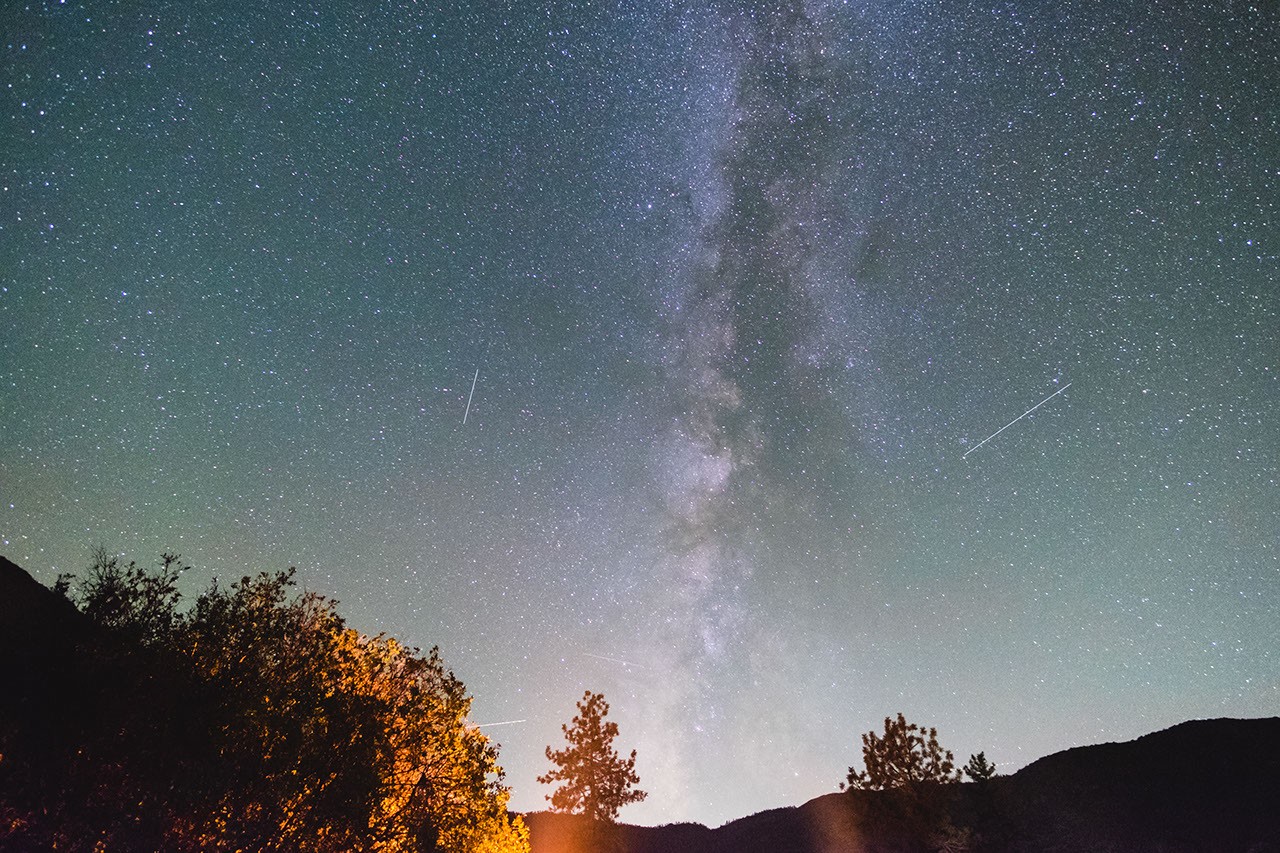
Thumbnail source ↗A long-exposure photograph of a clear night sky filled with countless stars, featuring the bright, dust-filled band of the Milky Way galaxy stretching vertically through the center. Faint streaks of light from meteors are visible across the sky. Along the bottom, dark silhouettes of trees and distant mountain ridges frame the horizon, with warm light glowing softly behind the foliage on the lower left.
NASA's October skywatching calendar points to a fresh target after this week's Orionid meteor shower: the Moon passes near the Pleiades on October 27 and 28. The Pleiades, also called the Seven Sisters, are a compact cluster that is easy to recognize as a small sprinkling of bright stars. A nearby Moon provides a useful reference point for finding the cluster.
The viewing plan is deliberately simple. Choose a clear evening with an open view of the sky, locate the Moon, then scan nearby with binoculars rather than a high-magnification telescope. The Moon will be bright, so a camera may expose the lunar surface and the stars very differently; try separate exposures if you want a composite.
This is also a good exercise in repeat photography. Shoot the same framing on consecutive nights and compare how far the Moon moves against the more distant star background. NASA provides charts and a short explainer; the exercise turns a calendar note into a visible demonstration of orbital motion.