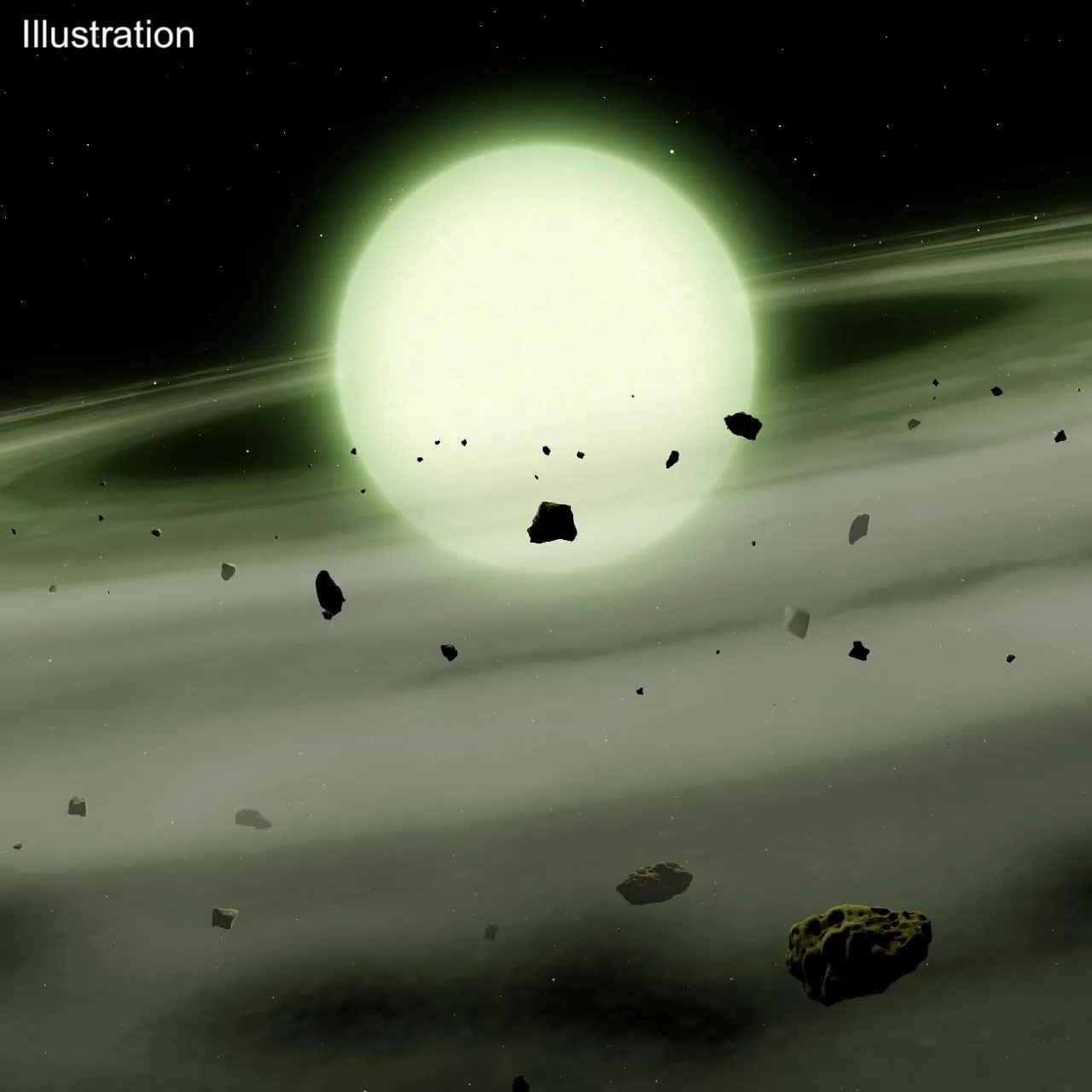
Astronomers have identified a remarkable exception to the usual stellar palette: the white dwarf WD J1330+6435 would appear green if you could see its disk close enough. NASA’s October 22 Astronomy Picture of the Day illustrates the star surrounded by gas and rocky debris. White dwarfs are the dense remains of Sun-like stars after they have exhausted their fuel.
The surprising color is not a green glow you can pick out in a backyard telescope. Trace material accreted from surrounding rocks changes which wavelengths the stellar atmosphere absorbs, altering the light that would be visible at close range. Researchers are finding other unusual shades, including pink and purple. These are clues to the chemistry of the star and the planetary material it has consumed.
Open the NASA illustration and read the explanation; then compare it with the research reporting on the discovery. It is a compact way to understand how astronomers infer the fate of distant planetary systems from light alone.
What to do: Open NASA’s green-star illustration and follow the explanation of how stellar spectra reveal consumed rocky material.