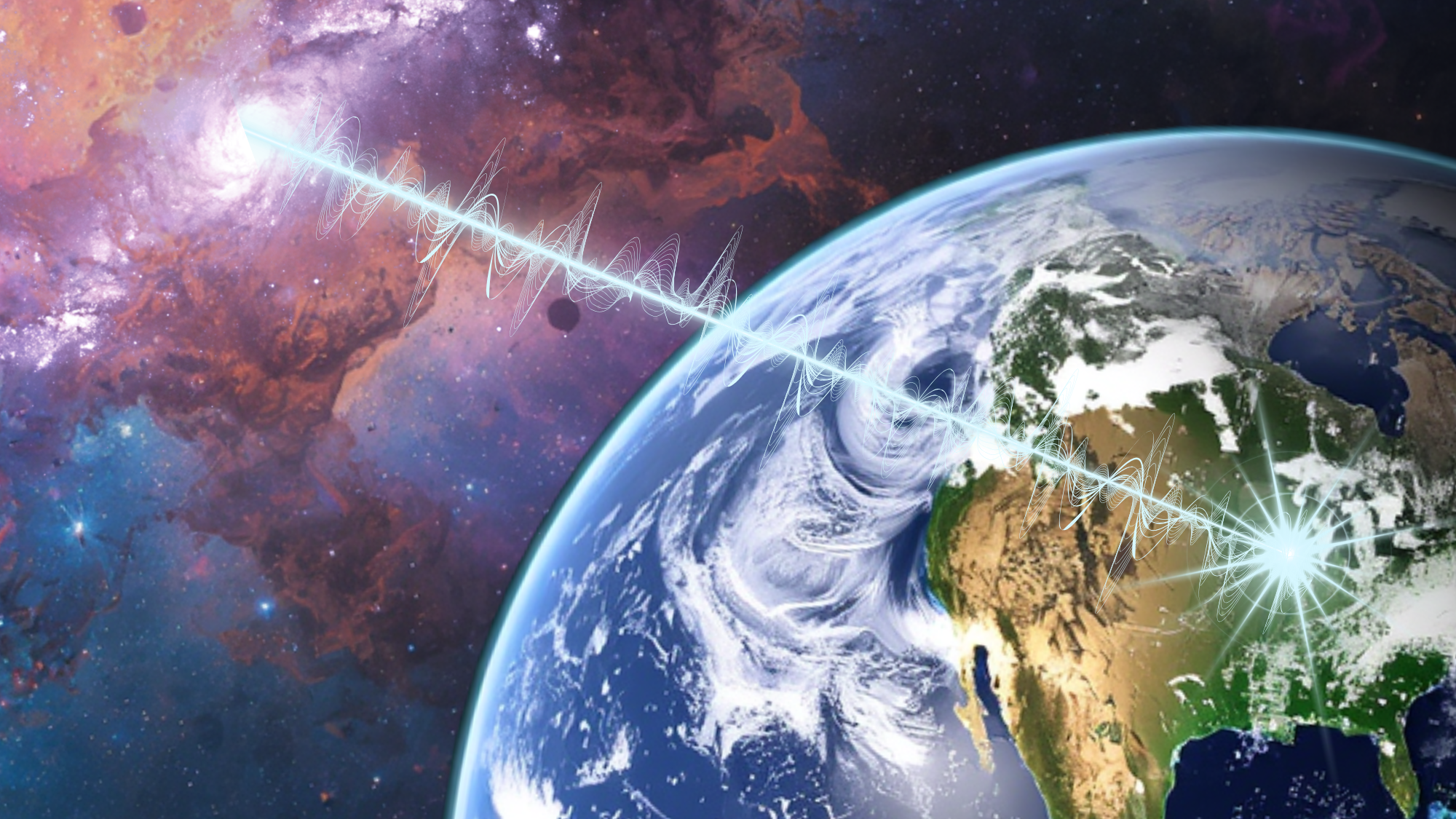
Astronomers have identified an exceptionally distant fast radio burst, FRB 20240304B, with follow-up observations by the James Webb Space Telescope. Reporting describes a source galaxy from when the universe was roughly three billion years old. Fast radio bursts last only milliseconds but can carry information about material they pass through.
The fascinating part is the measurement technique: a burst that is almost too brief to notice becomes a probe of matter distributed across billions of light-years. It is a reminder that the universe offers natural experiments no laboratory can reproduce.
What to do: Read the discovery explainer and look at the host-galaxy images. Compare the estimated travel time with the age of the universe to see why astronomers are excited by a single distant event.
Before you go further: Scientists still debate what produces many fast radio bursts. This result does not settle the mechanism or prove a specific exotic explanation.