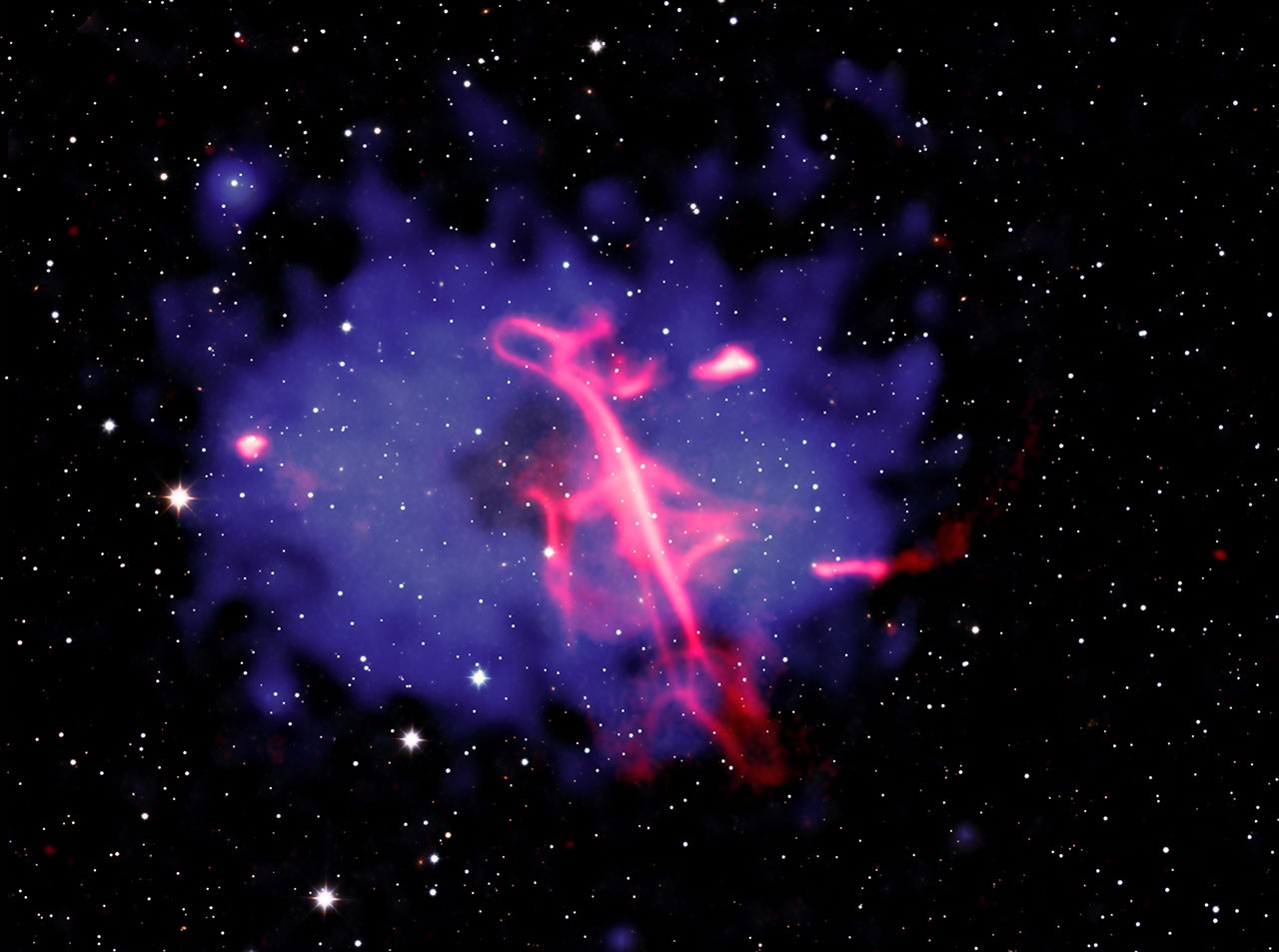
NASA’s October 14 Chandra release describes a radio formation nicknamed the Treble Clef because it resembles the musical symbol. Researchers infer that a supermassive black hole launched particles and magnetic fields, then a collision between galaxy clusters compressed and reenergized the radio-emitting structure.
This is the kind of science story worth opening for the picture alone. It also teaches a useful idea about composite imagery: different wavelengths reveal structures that the human eye cannot see directly.
What to do: Open NASA’s high-resolution composite and compare the radio, X-ray and infrared contributions. Treat it as both an astronomy discovery and an image-processing case study in communicating invisible phenomena.
Before you go further: The treble clef shape is a nickname for an observed radio structure, not a literal object. The collision explanation is a scientific interpretation supported by the data.