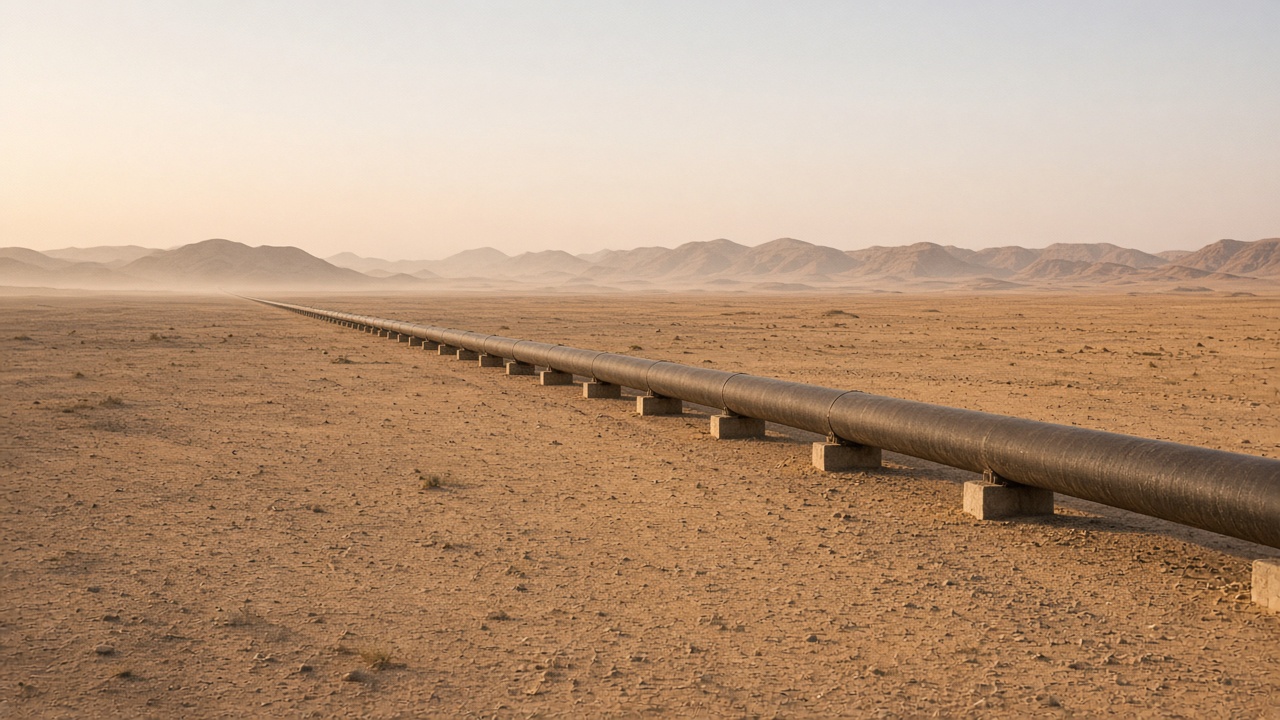
The most consequential economic story this morning is not simply that oil is above $100. It is that the routes designed to keep crude moving when one chokepoint becomes dangerous are themselves under pressure. Saudi Arabia temporarily shut its East-West pipeline after a drone attack that Baghdad and Riyadh said originated in Iraq.
The 1,200-kilometer pipeline crosses the Arabian Peninsula and lets Saudi crude reach the Red Sea without entering the Strait of Hormuz. Reuters says it had been moving roughly 4 million to 5 million barrels per day in recent months, equal to around 4% to 5% of global oil supply.
The second development compounds the risk. Iran-backed Houthi forces seized Perim Island beside the Bab el-Mandeb strait at the southern entrance to the Red Sea, another major global shipping chokepoint.
For households and businesses, sustained oil prices above $100 can feed gasoline and diesel prices, airline costs, freight rates, plastics, chemicals and inflation expectations. That makes the energy story relevant far beyond traders.
The key question is duration. A quick pipeline reopening and calmer shipping lanes would limit the damage. Prolonged impairment at Hormuz and Bab el-Mandeb would turn an energy shock into a wider inflation and growth problem.
Saudi Arabia temporarily shut its East-West oil pipeline after a drone strike from Iraqi territory. The line had been moving roughly 4–5 million barrels a day, about 4%–5% of global supply, while tanker traffic through Hormuz was already constrained. Houthi forces also seized Perim Island near Bab el-Mandeb.