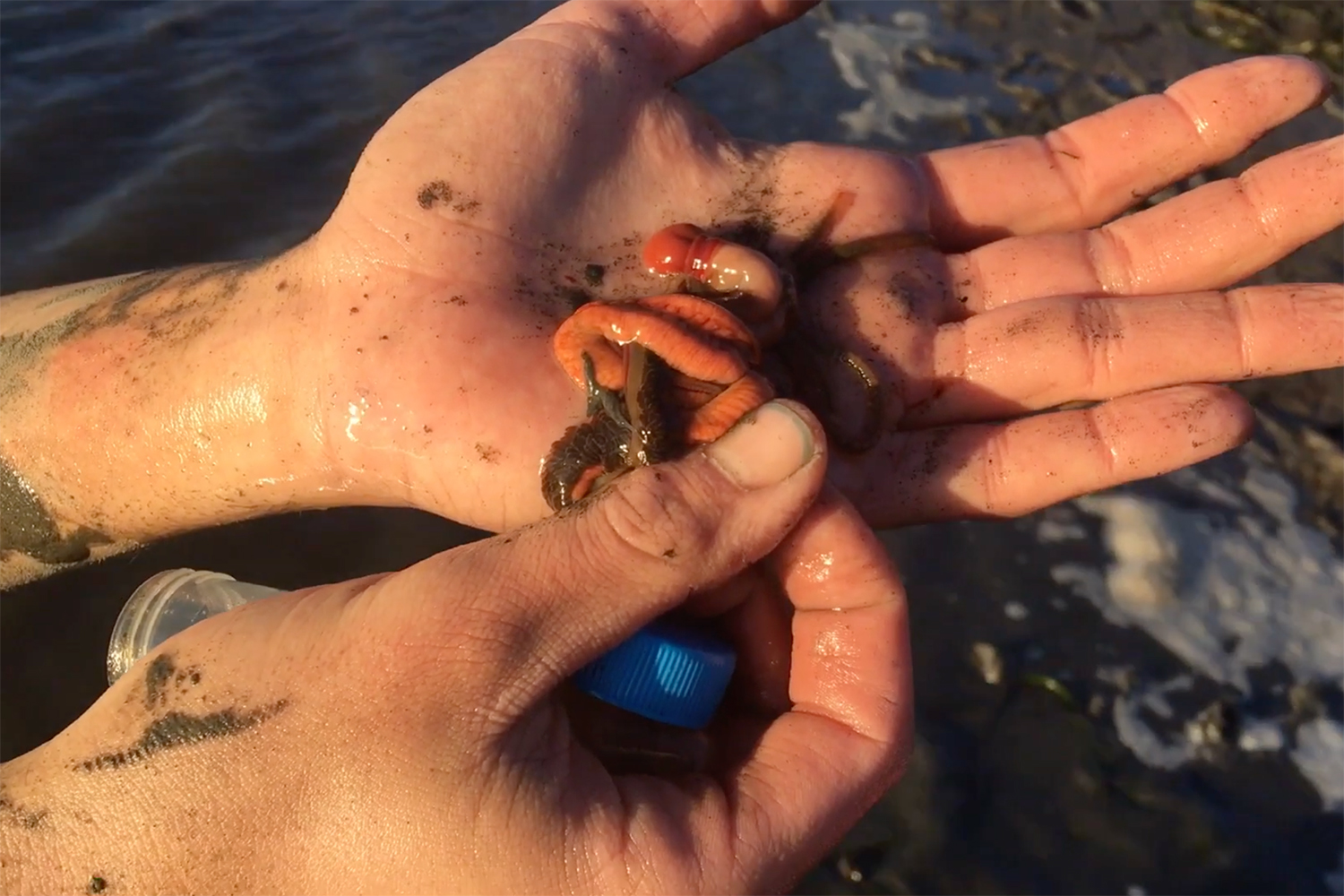
The acorn worm Schizocardium californicum begins life as a tiny transparent larva that researchers jokingly describe as a swimming head. Months later it becomes a long, mud-burrowing animal.
Using single-cell RNA sequencing across more than 87,000 cells, Stanford-led researchers found evidence that many larval cells survive metamorphosis but change identity. Larval nerve cells, for example, could end up molecularly resembling a different adult cell type rather than simply remaining neurons.
That is unusual because normal development is often described as a narrowing process: cells become more specialized and less flexible over time. If similar reprogramming turns out to be common in other animals, metamorphosis may rely much more heavily on cellular reinvention than biologists assumed.
A Stanford-led study of the acorn worm Schizocardium californicum found extensive evidence of cellular reprogramming during metamorphosis.