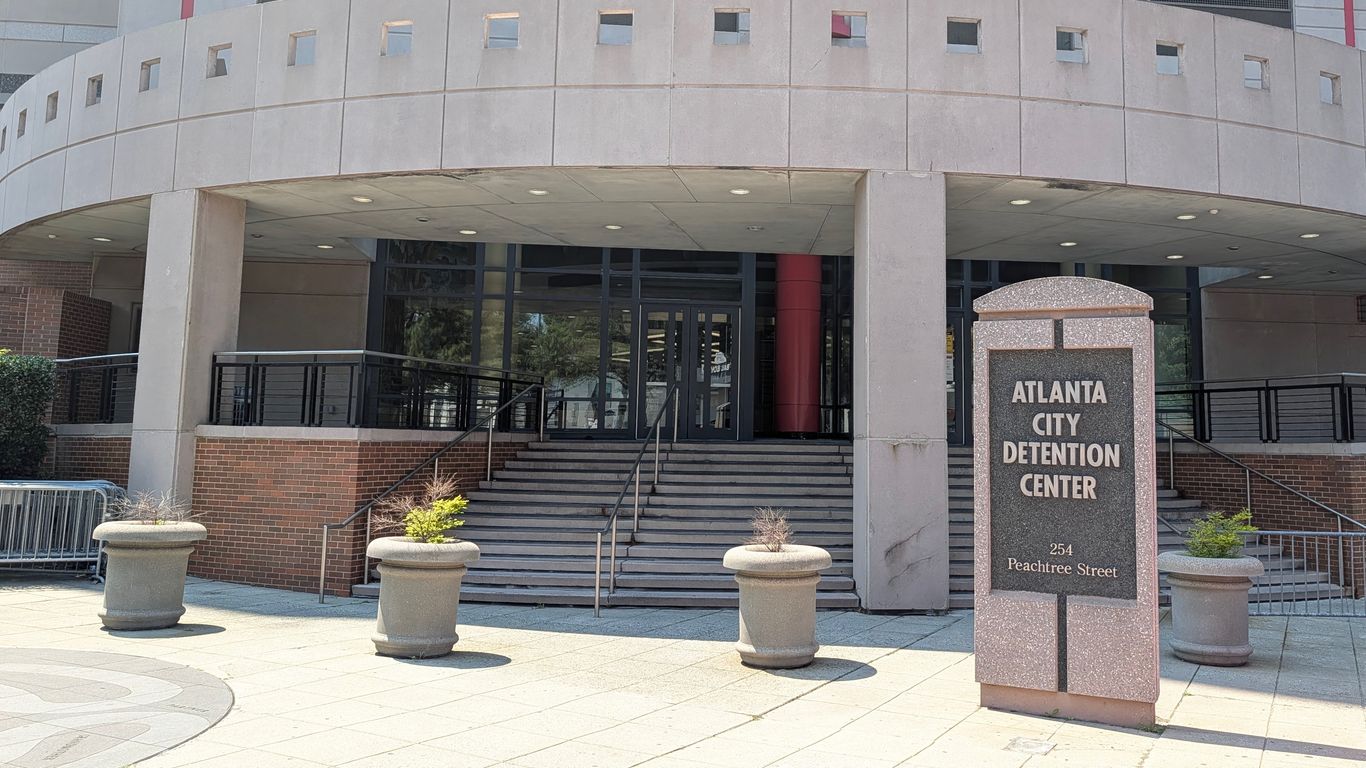
Atlanta and Fulton County have spent years arguing over what to do with the Atlanta City Detention Center. Wednesday morning brought the clearest sign yet that the property is headed toward county ownership: Mayor Andre Dickens accepted Fulton County’s $68 million purchase offer.
The building has already been functioning as part of the county jail system in practice. Fulton began leasing bed space there in 2022 to ease overcrowding at the county’s main Rice Street jail. That arrangement is scheduled to expire in November, so a permanent ownership decision has a real operational deadline attached to it.
The negotiation was not simply about price. Dickens had previously asked $80 million, withdrew that proposal during a separate fight over tax-allocation districts, and then came back at $68 million with conditions that included county support for a new West End hospital and changes to commercial property assessments. Fulton accepted the $68 million figure but rejected those extra conditions as unrelated to the real-estate transaction.
Now Dickens has accepted the county’s offer. That is the major threshold, but it is not closing day. The Atlanta City Council and Fulton County Board of Commissioners both still need to approve the sale before it can move forward.
There is a real disagreement behind the bureaucratic language. City and county leaders say using an existing 1,300-bed facility is more fiscally responsible than building new capacity and can support more humane conditions. Opponents, including Community Over Cages, argue that a sale makes what was described as a temporary jail lease into permanent detention infrastructure and abandons earlier plans to repurpose the building for community use.
For an Atlanta resident, the practical thing to watch is no longer the bargaining price. It is the formal terms that reach council and commission: detainee capacity, the future of diversion and mental-health services, what city detainees cost Atlanta after the sale, and whether any of the earlier hospital or tax conditions reappear through a different agreement.
If both governing bodies approve the transaction, a downtown building that has represented Atlanta’s long-running debate over incarceration versus reuse will become a Fulton County asset. That is a consequential local-government move even if you never set foot inside the facility.