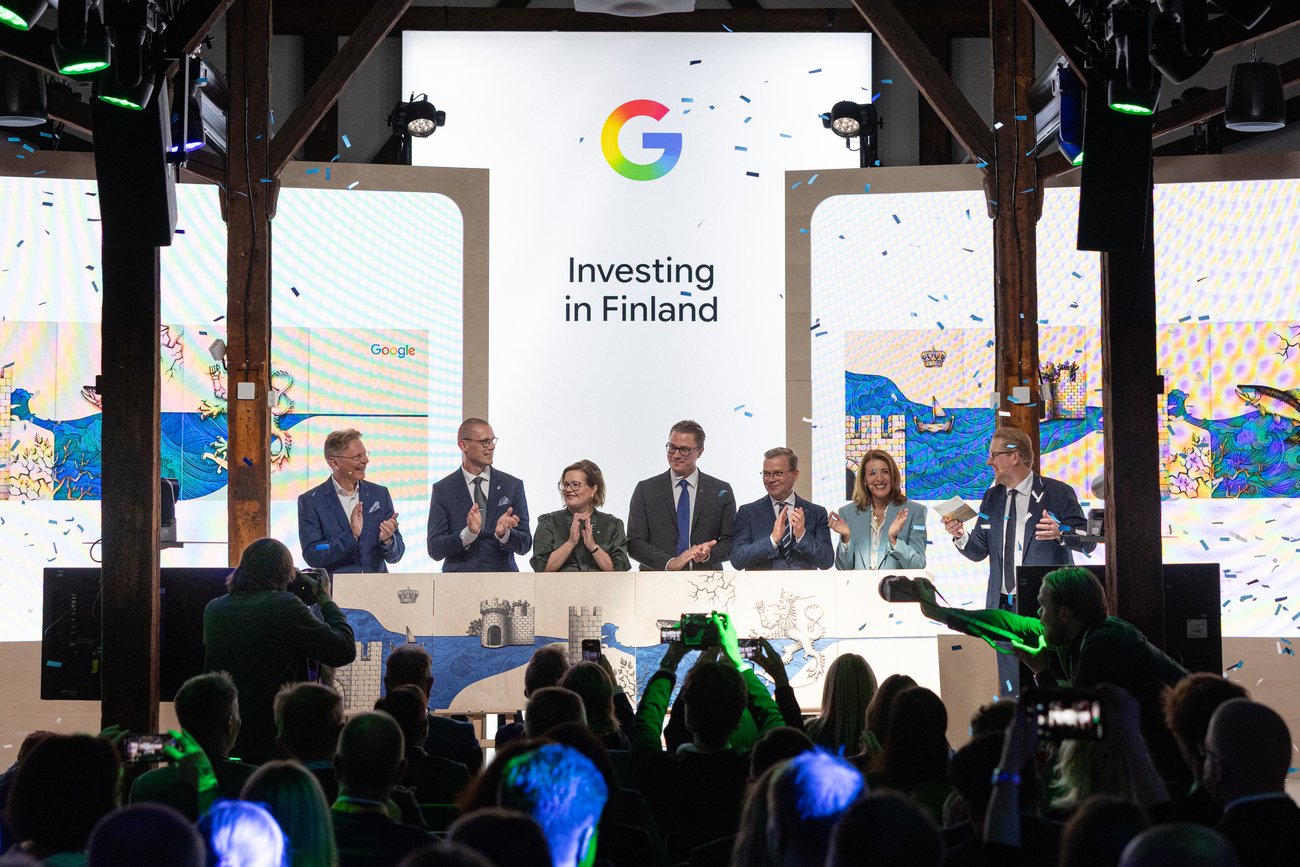
Google↗’s newest AI announcement is striking because the most important technology in it may be a nuclear plant that began operating before the personal-computer era. The company says it will invest €13 billion in Finland during 2027 and 2028 across data centers, grid infrastructure, clean energy and battery projects.
At the center is a 22-year power purchase agreement with Fortum↗. The contract starts at smaller capacity in 2028 and is designed to cover 50% of the Loviisa nuclear plant’s capacity from 2030 through 2049. Fortum says the revenue certainty supports an approximately €1 billion life-extension program needed to keep the two-reactor plant running through 2050.
Loviisa is not a rounding error in Finland. Fortum says it provides about 10% of the country’s electricity. The reactors were commissioned in 1977 and 1980, and keeping them online requires hundreds of millions of euros of still-uncommitted capital. A hyperscaler promising to buy power for decades changes the investment math.
The deal also includes a 94-megawatt battery system next to Google’s planned Kajaani data center, additional wind generation and an agreement to explore new nuclear, renewables and other flexible generation. In other words, Google is not merely showing up as a large customer; it is helping assemble an energy portfolio around its computing demand.
This is where the AI-capex story gets more interesting for an entrepreneur. Model quality and chip supply are visible. The scarcer hidden inputs are dependable megawatts, transmission capacity, cooling, land, permits and long-term contracts. Those constraints create entire layers of opportunity around infrastructure software, power optimization, facility operations and capacity planning.
Google says the Finland program will support more than 37,000 jobs nationwide during the initial 2027–2028 construction phase and contribute €3.6 billion annually to Finnish GDP during that period. Reuters says roughly 7,000 jobs a year should be supported once the facilities are operating.
We have touched AI infrastructure recently, so the repeat test matters here too. The material new piece is not “AI needs lots of power.” It is the structure of the deal: a 22-year nuclear-backed contract explicitly used to extend an existing plant’s life. That is a new blueprint for turning long-lived energy assets into AI infrastructure.