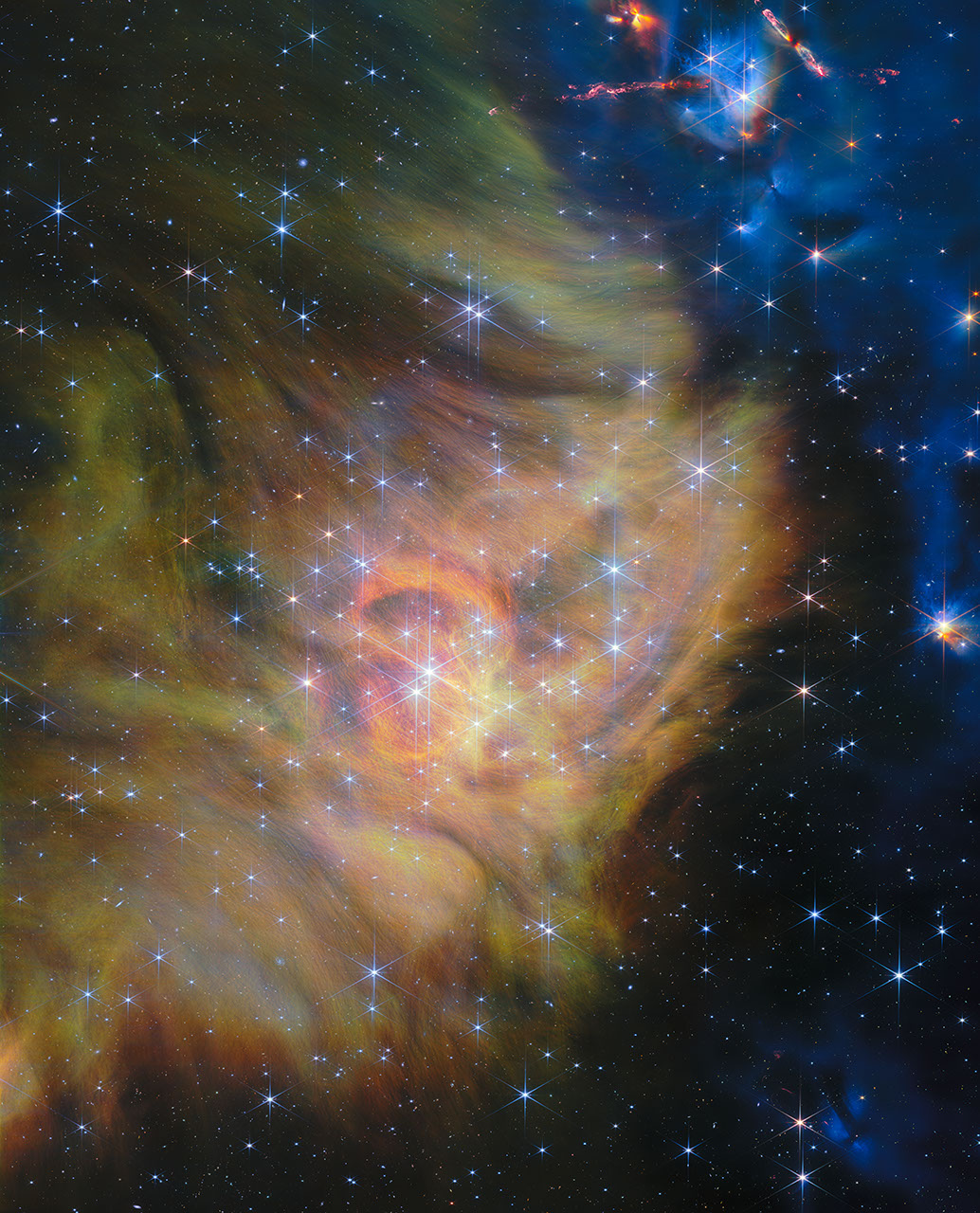
The team used NIRCam in 2024 to pick candidates by color and brightness, then NIRSpec in 2025 to weigh them spectroscopically. The new image is one of the largest Webb panoramas released of the region.
Brown dwarfs sit between planets and stars. Finding them this light in a nearby nursery implies either formation channels that look more like giant planets, or a mass function that extends lower than textbooks drew.
This is a September 15 NASA science release, not a rehash of last week’s APOD alignment. It is a mass-floor story: the smallest objects that still formed like stars may be smaller than theory allowed.
NASA’s James Webb Space Telescope looked again at IC 348, a star-forming region about 1,000 light-years away, and found brown dwarfs down to roughly twice the mass of Jupiter — about 0.19 percent of the Sun’s mass.
That is below earlier Webb finds of three to four Jupiter masses in the same cloud, and it pushes formation models that did not expect objects this small.