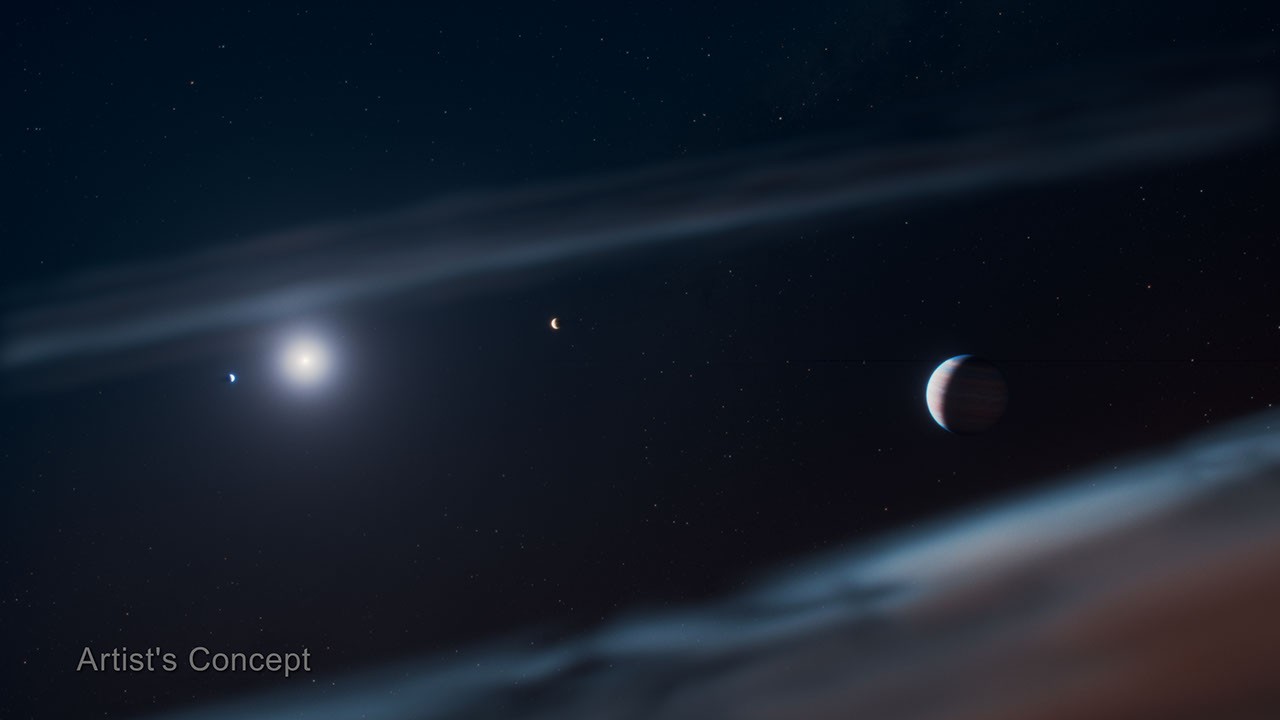
NASA reports that Webb identified Beta Pictoris d, a giant planet in a well-studied young system already known to host two giant planets. The discovery used the chemical fingerprint of the atmosphere rather than relying solely on a clear point of light.
Carbon monoxide absorption lines helped the researchers distinguish a planet from background features and measure its motion. Follow-up observations detected water vapor and methane. This is a fascinating example of how an instrument can infer the nature of something it barely sees.
The useful action is simply to explore the original NASA illustrations and spectra. It is a good family science conversation: a pattern of missing light can tell you what a distant atmosphere contains.
Go to Source — https://science.nasa.gov/missions/webb/nasas-webb-discovers-hidden-planet-in-famous-star-system/